Effective bed bug treatment in Dubai starts with a thorough inspection to find every harbourage, followed by targeted treatment of the bed, furniture, skirting and nearby cracks, and at least one follow-up visit to catch newly hatched bugs. Preparing the room properly and following the after-care advice matters as much as the treatment itself. Shop-bought sprays rarely solve the problem and often push bed bugs into neighbouring rooms.
Bed bugs are one of the most common calls we receive across Dubai, from shared flats in International City and Al Qusais to villas in Arabian Ranches and serviced apartments in Downtown Dubai. They are not a sign of a dirty home. They travel in luggage, second-hand furniture and laundry bags, and in a city where people move flats often and travel constantly, they get around easily. This guide explains what to look for, what a professional visit involves and what you need to do on your side.
Signs of bed bugs in a Dubai home
Bed bugs hide during the day and feed at night, so most people notice the bites before they ever see a bug. Bites alone are not proof, though, because mosquito and other insect bites can look similar. Look for physical evidence as well.
- Small dark spots on mattress seams, the bed base, headboard joints and pillow edges. These are droppings and look like dots from a felt-tip pen.
- Tiny blood smears on sheets or pillowcases, usually from a bug crushed after feeding.
- Pale, empty skins that bed bugs shed as they grow, often tucked into seams and screw holes.
- Live bugs: flat, oval and reddish-brown, roughly the size of an apple seed when adult. Young ones are smaller and paler.
- A sweet, musty smell in heavier infestations, especially in closed bedrooms where the AC runs all day.
- Bites in lines or clusters on arms, neck and legs that appear after sleeping, sometimes on only one person in the bed.
Check the sofa too, particularly if someone has been sleeping on it. In shared accommodation and staff housing, bed bugs often spread from bunk to bunk long before anyone reports them.
How professional bed bug treatment works
A single spray around the bed is not treatment. Bed bugs hide in places a quick visit will miss, and their eggs are far more resistant than the adults. A proper bed bug eradication service follows a clear sequence.
What we do on a visit
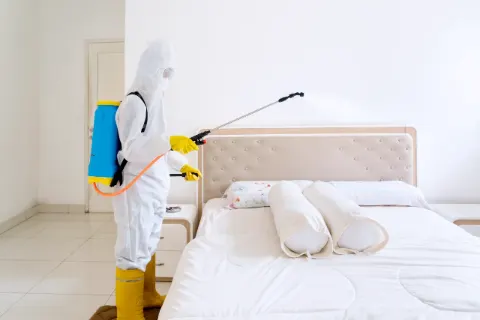
- Inspection. Our certified technicians check the mattress, bed frame, headboard, bedside tables, curtains, skirting boards, electrical faceplates, wardrobes and sofas to map where the bugs are living and how far they have spread.
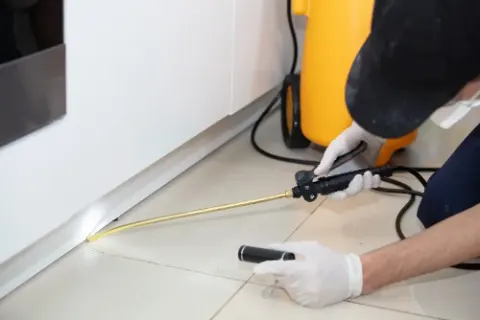
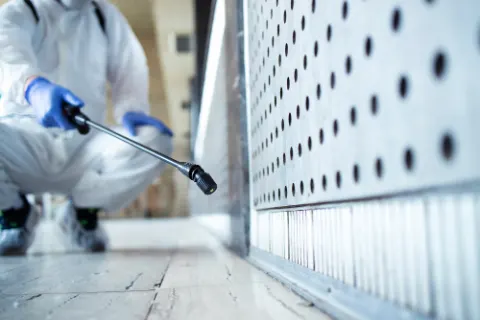
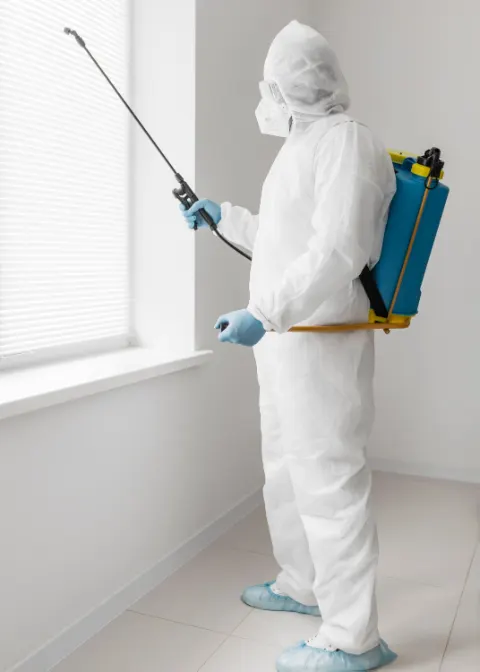
- Targeted treatment. We treat harbourages directly, using products approved by Dubai Municipality and methods matched to each surface. Mattresses, fabric, wood and electrical points are not all treated the same way.
- Adjacent areas. We check rooms that share a wall with the infested bedroom, because bed bugs move through gaps along skirting and service openings.
- Follow-up visit. We return to treat bugs that hatch from eggs laid before the first visit. Skipping this step is the most common reason bed bugs come back.
- Clear advice. Before we leave, we explain when you can re-enter the room, what to wash and what to watch for.
In apartment buildings, we may recommend that building management has neighbouring units checked as well. Treating one flat while the next one is infested only buys you a few weeks.
How to prepare the room before treatment
Good preparation lets the technician reach every hiding place and stops you carrying bugs into other rooms. We will confirm the exact steps when you book, but these apply to most homes.
- Bag your bedding and clothes. Strip sheets, pillowcases, duvet covers and curtains. Seal them in plastic bags inside the room, then wash on the hottest setting the fabric allows and tumble dry on high heat.
- Empty bedside tables and wardrobe floors. Bag the contents and keep them sealed until we have treated the room.
- Clear the floor and the area under the bed. Suitcases, shoe boxes and storage under the bed are favourite hiding places.
- Do not move furniture into other rooms. Moving an infested mattress or sofa to the living room spreads the problem.
- Vacuum, then seal the bag. Vacuum mattress seams and carpet edges, then seal the vacuum bag in plastic and dispose of it outside the flat.
- Stop using sprays. Over-the-counter insecticides scatter bed bugs into walls and neighbouring rooms, which makes professional treatment harder.
- Plan for pets, children and anyone unwell. Tell us when you book so we can advise on timing and how long to stay out of the room.
After-care: what to do once the room is treated
The days after treatment decide whether the job holds. Follow the re-entry time your technician gives you and then:
- Keep sleeping in the treated bed. You act as the bait that draws remaining bugs across treated surfaces, so moving to another room can spread them.
- Do not wash or wipe treated skirting boards, bed frames or furniture until your technician says it is fine.
- Keep clean bedding in sealed bags until it goes back on the bed, and do not let bedding touch the floor.
- Consider zipped mattress and pillow encasements to trap anything left inside and make future checks easier.
- Expect to see the odd bug in the first days after treatment as they come out of hiding. Note where you see them and tell us at the follow-up.
- Keep the follow-up appointment even if you have not seen anything. Eggs hatch on their own timetable.
Why DIY bed bug treatment usually fails
We understand the temptation to buy a spray and deal with it yourself, but bed bugs are one pest where DIY nearly always makes things worse. Many products sold online are not approved for indoor use in the UAE, and applying pesticides on a mattress or in a child's room without training is a real health risk. Bug bombs and foggers do not reach inside seams and cracks, and repellent sprays drive bugs deeper into furniture and walls. Use a licensed company that applies Dubai Municipality-approved products and can explain exactly what has been used in your home.
If you also want to reduce the chance of other pests returning, our home pest prevention programmes cover routine checks for villas and apartments.
Book a bed bug inspection
SEPEST has more than 15 years of pest control experience in Dubai and covers areas including JVC, Dubai Marina, Al Barsha, Motor City, Mirdif and Deira. We are open 24 hours, 7 days a week, so if you have just found bed bugs late at night or before a guest arrives, call or WhatsApp us on +971 50 584 3228, or send us your details and we will arrange an inspection.
Frequently Asked Questions
How many visits does bed bug treatment need?
Most homes need at least two visits: the main treatment and a follow-up. The follow-up deals with bugs that hatch from eggs laid before the first visit. Heavier or multi-room infestations can need more, which the technician will confirm after the inspection.
Can I stay in my flat during bed bug treatment?
You will need to stay out of the treated rooms for the time your technician advises, usually a few hours. You do not normally need to leave the whole building. Children, pets and anyone with health conditions should be mentioned when you book so we can plan the timing.
Do I need to throw away my mattress?
Usually not. Most mattresses can be treated and then fitted with a zipped encasement. We only suggest replacing a mattress if it is badly torn or heavily infested, and if you do, wrap it in plastic before carrying it out so you do not spread bugs through the corridor.
How did I get bed bugs if my home is clean?
Bed bugs are carried in, not caused by dirt. They travel in luggage, second-hand furniture, laundry and visitors' bags, and they can move between apartments through wall gaps. Recent travel or a new piece of used furniture is a common starting point.
Are bed bug treatment products safe for my family?
We use products approved by Dubai Municipality, applied by certified technicians to targeted areas. Following the re-entry time and after-care advice keeps exposure low. This is one of the main reasons to avoid unlicensed DIY pesticides.